1
/
of
2
Coins and Banknotes
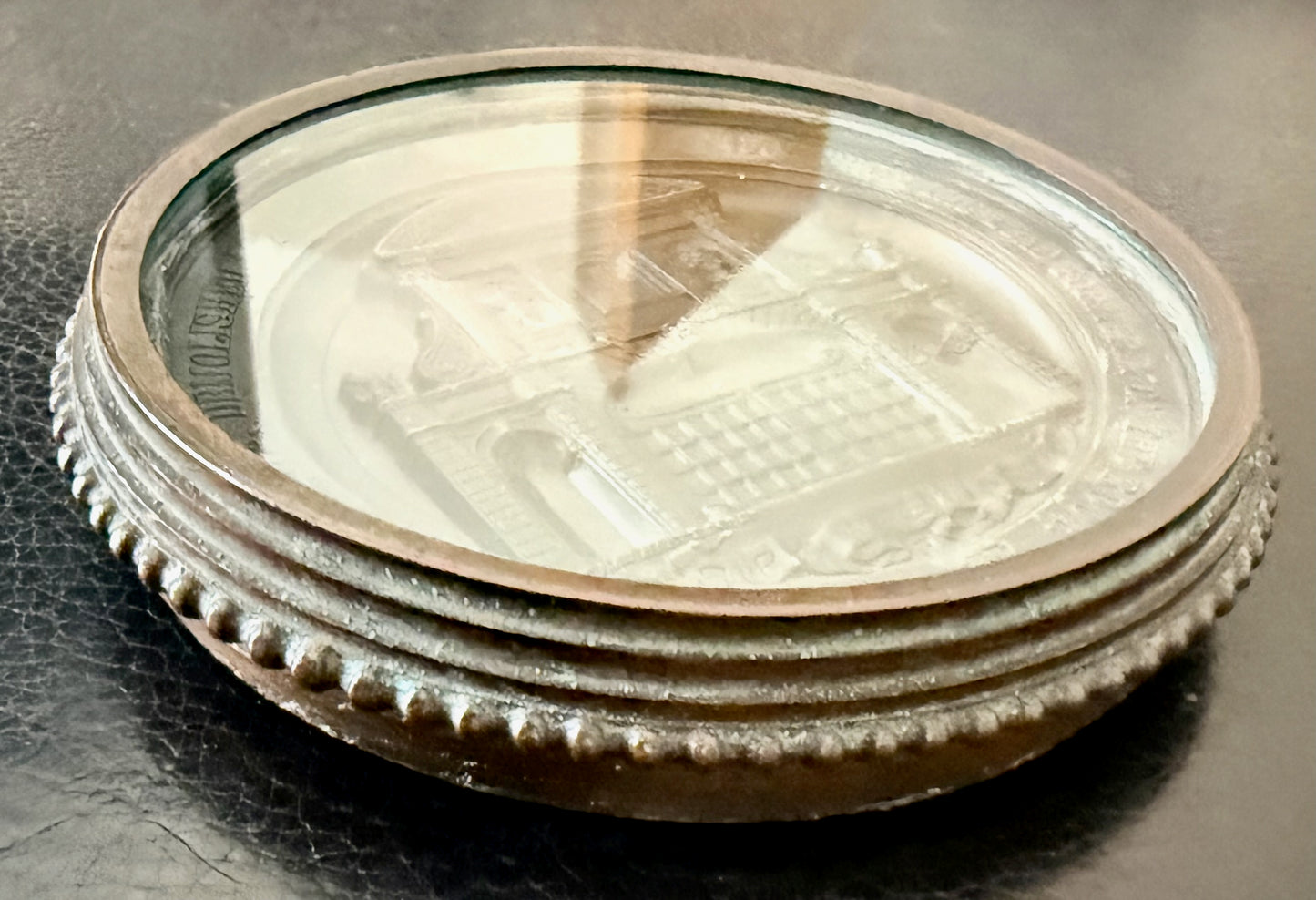
1878 Removal of Temple Bar from the City of London l113mm lead uniface glazed medal BHM 3051 E1658
1878 Removal of Temple Bar from the City of London l113mm lead uniface glazed medal BHM 3051 E1658
Regular price
£495.00 GBP
Regular price
Sale price
£495.00 GBP
Shipping calculated at checkout.
Quantity
Couldn't load pickup availability
-
Obv: Elevation of the decorative facade, TEMPLE BAR: ERECTED 1672. DEMOLISHED 1878: THIS EFFIGY OF IT WAS STRUCK FROM THE LEAD FORMERLY ON THE ROOF
-
Mounted under glass and within brass frame for use as a paperweight.
-
By Foot and Tebay after C. H. & J. Mabey
-
133mm; 880g
-
Of the eight main entrances into the medieval walled City of London, only Temple Bar survives. First recorded in 1293, the historic gateway regulated trade and traffic coming into the City from the west. Its long history takes in royal pomp, political ceremonies and a brief spell outside the capital.
- In 1666, the Great Fire of London burned a path of destruction as far west as the Temple area. The old wooden gate survived, but Temple Bar still wasn’t in a good state. In 1672, King Charles II tasked influential architect Christopher Wren to rebuild it in valuable Portland stone. The new gate featured sculptures of the king and his ancestors Charles I, Queen Anne of Denmark and James I.
- In the 1800s, the City’s major roads struggled to cope with London’s increasing population. The stone gateway was taken down in 1878 when Fleet Street was widened to ease congestion. This also helped make space for the new Royal Courts of Justice.
- In 1976, hotelier and former lord mayor Hugh Wontner formed the Temple Bar Trust to rescue the run-down landmark and bring it back to the City. Eventually, in 2004, the gate was cleaned up and reconstructed in Paternoster Square, near Wren’s most famous Portland stone landmark, St Paul’s Cathedral.
Share